Does PRP (Platelet-Rich Plasma) Actually Work for Knee Pain?
Knee pain affects millions of people worldwide and is one of the leading causes of reduced mobility and quality of life. Whether caused by osteoarthritis, cartilage wear, sports injuries, or age-related degeneration, persistent knee pain often interferes with daily activities such as walking, climbing stairs, exercising, and even sleeping comfortably.
As more patients seek alternatives to pain medications, repeated steroid injections, and surgery, Platelet-Rich Plasma (PRP) therapy has gained significant attention. But an important question remains, does PRP actually work for knee pain, or is it just another medical trend? The answer lies in understanding how PRP works, what current research shows, and which patients are most likely to benefit from this regenerative treatment.
What Is PRP Therapy?
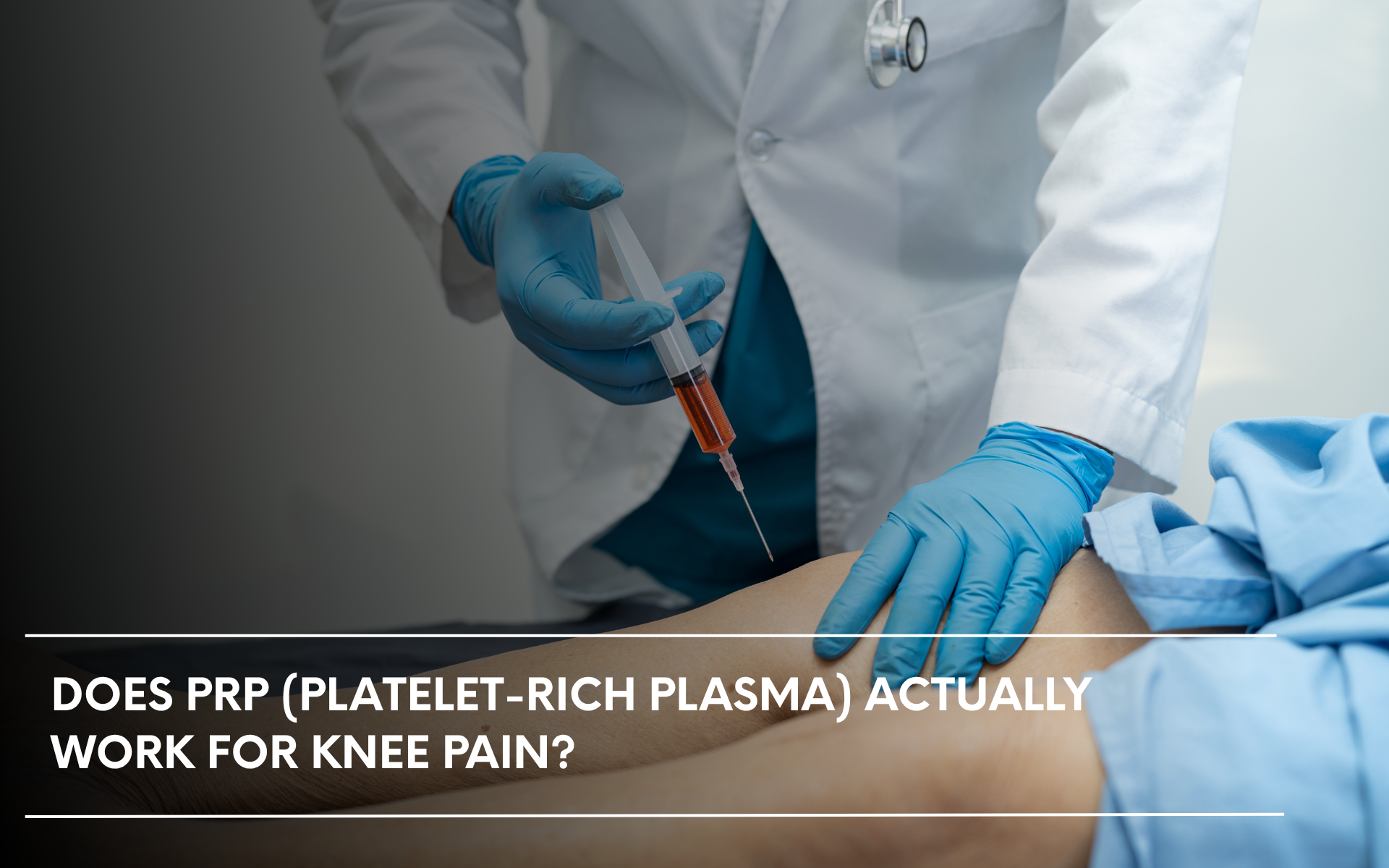
Platelet-Rich Plasma (PRP) is a regenerative treatment that uses a concentrated form of a patient’s own blood platelets. These platelets contain numerous growth factors and bioactive proteins that play a vital role in tissue healing and inflammation control.
During a PRP procedure:
- A small amount of the patient’s blood is drawn.
- The blood is processed using a specialised centrifuge.
- The platelet-rich portion is separated and concentrated.
- The PRP is injected directly into the affected knee joint under sterile conditions.
Unlike painkillers that simply mask symptoms, PRP aims to stimulate the body’s natural healing response within the damaged tissues.
Why Is PRP Used for Knee Pain?
Many forms of knee pain are associated with inflammation, cartilage degeneration, tendon injuries, and microscopic tissue damage. PRP is used exactly reciprocate all these signs including
- Reduce inflammation inside the joint.
- Improve the joint environment.
- Stimulate tissue repair
- Support cartilage health
- Promote healing of ligaments and tendons.
- Improve overall knee function.
This biological approach makes PRP particularly attractive for patients seeking non-surgical treatment options.
What Does the Research Say?
Over the past decade, PRP has been extensively studied for knee osteoarthritis and chronic knee pain.
Multiple systematic reviews and meta-analyses have found that PRP can significantly improve pain and physical function in patients with knee osteoarthritis, particularly in mild to moderate cases. Several studies have reported better outcomes with PRP compared to hyaluronic acid injections, placebo injections, and even corticosteroid injections in many patients.
Research also suggests that the benefits of PRP may last longer than steroid injections, with improvements often continuing for six to twelve months after treatment.
However, experts also point out that PRP preparations vary considerably between clinics, making it difficult to standardise outcomes. Differences in platelet concentration, injection protocols, and patient selection contribute to varying results across studies. Because of this variability, some professional guidelines remain cautious despite encouraging clinical evidence.
PRP vs Traditional Knee Pain Treatments
The following comparison highlights how PRP differs from commonly used knee pain treatments:
| Treatment | Primary Goal | Duration of Relief | Addresses Healing? |
| Pain Medications | Symptom control | Temporary | No |
| Corticosteroid Injections | Reduce inflammation | Weeks to months | No |
| Hyaluronic Acid Injections | Improve lubrication | Several months | Limited |
| PRP Therapy | Promote biological healing | Months to a year or longer in selected patients | Potentially |
| Knee Replacement Surgery | Replace damaged joint | Long-term | Surgical solution |
PRP occupies a unique position between conservative treatments and surgery, making it appealing for patients who are not ready for joint replacement.
Which Patients Benefit the Most?
PRP is not a one-size-fits-all treatment. Outcomes are generally better when the therapy is used in the right patients at the right stage of disease.
Patients who may experience the greatest benefit include:
- Mild to moderate knee osteoarthritis
- Early cartilage degeneration
- Chronic knee pain that has not responded to physiotherapy
- Sports-related knee injuries
- Tendon or ligament-related knee conditions
- Individuals seeking to delay surgery
Several studies have shown that patients with advanced “bone-on-bone” arthritis may experience less predictable results because significant structural damage has already occurred.
How Long Does It Take to See Results?
Unlike steroid injections that often provide rapid relief, PRP works through biological healing mechanisms. Many patients notice:
- Initial improvement within 2–6 weeks
- Continued progress over 2–3 months
- Maximum benefits after several months
The healing process is gradual because the body requires time to respond to the growth factors released by the platelets.
So, Does PRP Actually Work for Knee Pain?
Current scientific evidence suggests that PRP is a legitimate treatment option for many patients with knee pain, particularly those with mild to moderate osteoarthritis and certain soft tissue injuries. Numerous studies have demonstrated meaningful improvements in pain and function compared with placebo and several conventional injection therapies.
Success depends on accurate diagnosis, proper patient selection, high-quality PRP preparation, and realistic treatment goals.
For the right candidate, PRP can provide significant symptom relief, improve mobility, and potentially delay the need for more invasive procedures.
Expert PRP Evaluation at Orthobiologix Clinic
At Orthobiologix Clinic, we believe that every patient deserves a personalised approach to knee pain treatment. Our regenerative medicine specialists carefully evaluate the cause and severity of your condition before recommending PRP therapy or other advanced treatments.
If knee pain is limiting your lifestyle and you are looking for a non-surgical solution, schedule a consultation with our team to learn whether PRP therapy may be the right option for you.
Evaluate your pain at before it gets worse! Book your appointment today.
───────
Go to Our Website and Get in Touch
India’s first Non-Surgical Joint Preservation Clinic by an American Board Certified Regenerative Specialist. At The Orthobiologix Clinic, we specialise in minimally invasive, non-surgical procedures.
Go to our website at https://orthobiologixclinic.com
OR
Call +91 98193 77999 or WhatsApp +91 98193 77999
───────
Blog Keywords:
PRP therapy for knee pain, PRP for knee pain, platelet-rich plasma therapy, PRP treatment for knee osteoarthritis, PRP injection for knee pain, regenerative medicine for knee pain, knee osteoarthritis treatment, non-surgical knee pain treatment, knee arthritis treatment without surgery, PRP injections for arthritis, cartilage repair treatment, knee joint regeneration, sports injury PRP therapy, alternative to knee replacement surgery, PRP therapy in Mumbai, PRP treatment in Mumbai, best PRP treatment for knee pain in Mumbai, knee pain specialist in Mumbai, PRP injection clinic in Mumbai, non-surgical knee treatment in Mumbai, , knee osteoarthritis treatment in Mumbai,
Common Keywords:
best orthobiologics clinic for joint and soft tissue injuries, best PRP treatment center for tendon injuries, clinic for sports injuries, best non-surgical treatment for tendon and ligament pain, best orthobiologics clinic for advanced joint restoration, best PRP therapy for chronic musculoskeletal pain, best for ligament and tendon recovery, trusted non-surgical center for sports injuries, advanced orthopedic treatments for pain and mobility restoration, non-surgical orthopedic solutions for chronic injuries, personalized targeted tissue repair for musculoskeletal conditions, evidence-based PRP, comprehensive orthobiologics center, innovative orthopedic therapies for long-term injury recovery, natural healing-focused orthobiologics clinic, Knee Pain, Shoulder Pain, Elbow Pain, Wrist Pain, Sports Injuries, Tendonitis, Arthritis, Osteoarthritis, Tennis Elbow, carpal tunnel syndrome, rotator cuff tear, tendon injuries, Ligament injury, Low back pain management, spine pain management, Spinal Disc issues pain management, Herniated Disc pain relief, Slip Disc therapy, Best Spine pain doctor in Mumbai, Best Non Surgical pain management for Spine / Slipped Disc / Herniated Disc, Best Advanced orthopedic care from a minimally invasive orthopedic surgeon.